
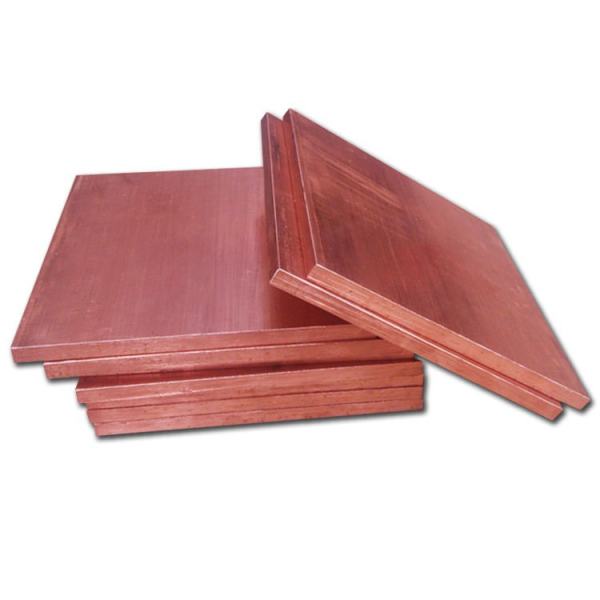
Pure copper is a rose-red metal that turns purple when a layer of copper oxide forms on its surface; therefore, industrial-grade pure copper is often referred to as red copper or electrolytic copper. It has a density of 8–9 g/cm³ and a melting point of 1083 °C. Pure copper has excellent electrical conductivity and is widely used in the manufacture of wires, cables, and brushes; it also has good thermal conductivity and is often used to make magnetic instruments and gauges that require protection against magnetic interference, such as compasses and aviation instruments; it has excellent plasticity and is easily processed by hot and cold forming, allowing it to be made into copper products such as tubes, rods, wires, strips, strips, sheets, and foils.
Brass is an alloy of copper and zinc. The simplest type of brass is a binary copper-zinc alloy, known as simple brass or ordinary brass. By varying the zinc content in brass, alloys with different mechanical properties can be produced. The higher the zinc content in brass, the higher its strength, though its ductility is slightly lower. Brass used in industry contains no more than 45% zinc; a higher zinc content would cause brittleness and degrade the alloy’s properties.
Tin bronze is one of the earliest alloys used in history. Originally referring to a copper-tin alloy, it is called “bronze” due to its bluish-gray color. Tin bronze possesses high mechanical properties, good corrosion resistance, low friction, and excellent castability; it has low sensitivity to overheating and gases, good weldability, is non-ferromagnetic, and has a low coefficient of thermal expansion. Tin bronze exhibits higher corrosion resistance than brass in atmospheric, seawater, freshwater, and steam environments.
HAVE ANY QUESTION?